The short answer is that King of Prussia is a car-dependent suburb overall, with one genuinely walkable pocket at the Town Center and mall corridor. The community's overall Walk Score is 36 out of 100, which ranks as car-dependent, meaning most errands require a car, while the Route 202 district around the Town Center scores about 72, the only very-walkable stretch in the area. For buyers, the practical question is not whether King of Prussia is walkable in the abstract, but which part of town you are in and how you plan to get around day to day. This guide lays out the real scores, the transit options, and the bike trails so you can match a 19406 address to the way you actually live.
Is King of Prussia Walkable? What the Scores Actually Say
Walk Score measures how easily you can reach daily errands on foot, and King of Prussia's citywide average of 36 out of 100 is squarely in the car-dependent range, per the Walk Score profile for ZIP 19406. The transit score is 32, meaning public transportation options exist but are limited, and the bike score is 31, indicating relatively few dedicated bike lanes on residential streets. In plain terms, a typical King of Prussia homeowner drives to the grocery store, the school drop-off, and most errands. That is not a criticism of the area so much as a description of its layout: it is a highway-era suburb built around I-76, the Pennsylvania Turnpike, and US-202, where the car is the default.
Which King of Prussia Neighborhoods Are the Most Walkable?
The walkable core is the commercial district, not the residential streets. The Route 202 corridor near the King of Prussia Town Center scores about 72 to 73, the highest in the ZIP, anchored by the open-air Town Center, the King of Prussia Mall, and the apartments and shops that line the district. Nearby spots follow the same pattern: King of Prussia Plaza scores 58, the address at 120 Shaffer Rd near the Town Center scores about 60, and the stretch along West DeKalb Pike at 530 W DeKalb scores 66, per Walk Score's address-level data. By contrast, the established residential villages of Gulph Mills, Swedesburg, and Swedeland, and most single-family subdivisions, run in the 30s to 40s, which is why families there drive to nearly everything.
How Do You Get Around by Transit in King of Prussia?
There is no direct rail into King of Prussia; SEPTA paused the King of Prussia Rail extension in 2023 and development work has ceased, so the closest train remains the Norristown High Speed Line at Gulph Mills, about three miles from the mall. The main local transit hub is the King of Prussia Transit Center at the mall, where SEPTA Suburban Division bus routes 92, 95, 99, 123, 124, 125, and 139 stop. These buses connect the area to Norristown, the Norristown High Speed Line, and points along the corridor, but frequencies and service hours are limited compared with Center City, and a transit score of 32 reflects that reality. Our King of Prussia commute guide goes deeper into drive times and transit, and the post on whether a train is coming to King of Prussia covers the stalled rail plan in detail.
Can You Reach Regional Rail or Center City Without a Car?
Yes, with planning. A connector shuttle operated by the King of Prussia Business Improvement District links the business parks to SEPTA Regional Rail during peak weekday hours, connecting to the Manayunk/Norristown Line at Norristown Transportation Center and the Paoli/Thorndale Line at Wayne Station, per SEPTA's King of Prussia page. The nearest Regional Rail stations on the Paoli/Thorndale Line are at Radnor, Wayne, St. Davids, and Devon, and on the Manayunk/Norristown Line at Conshohocken and Norristown. The Upper Merion Rambler is the township's own community shuttle, running blue and green routes Monday through Saturday from 9 a.m. to 4 p.m. at $2 per ride and serving the mall, shopping centers, medical facilities, the senior center, and the Township Building, including a Main Line Health stop added in June 2026. In practice, these options work best for weekday commuters and residents with flexible schedules; evenings and weekends remain strongly car-dependent.
What About Biking and Trails?
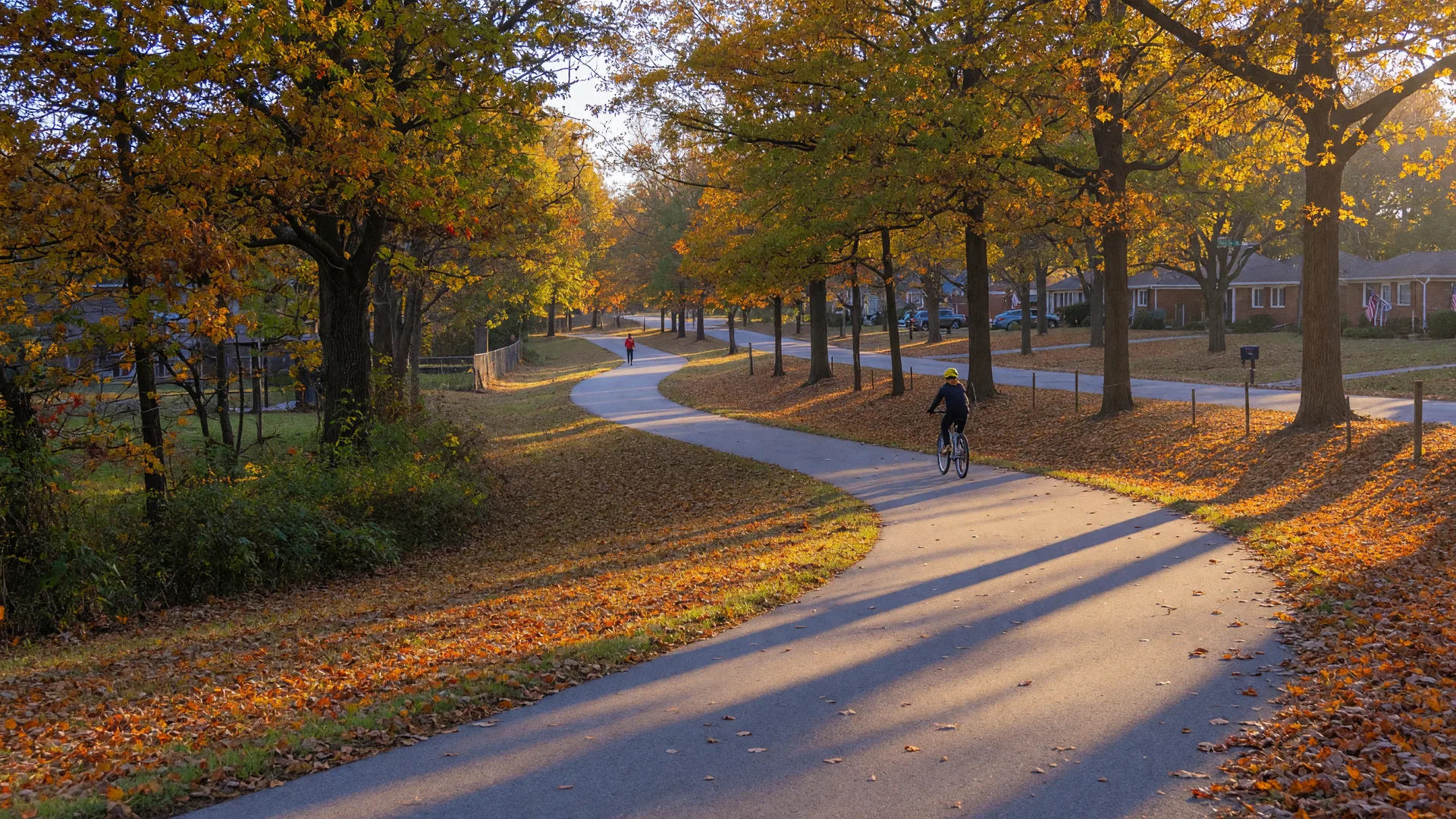
The bike score is a modest 31, but the region's trail network is the real asset for cyclists and runners. The Chester Valley Trail is a paved rail-trail whose Montgomery County section runs about 5.1 miles from Norristown to King of Prussia, with a King of Prussia trailhead near South Gulph Road and US-202 about a mile from the Town Center. The Schuylkill River West Trail adds a paved 2.2-mile stretch from Sullivan's Bridge to Bob Case Park, and Valley Forge National Historical Park offers more than 35 miles of trails a few minutes away. A planned Valley Forge Gateway Trail of about 2.8 miles would eventually link the Schuylkill River Trail, Valley Forge, and the Town Center directly; the project secured $450,000 in state funding in September 2026 to advance its North Gulph Road segment, per the King of Prussia District. For recreation, King of Prussia is excellent on two wheels; for errands, you will still drive.
What Does This Mean for a Buyer at 340 Anderson Rd?
340 Anderson Rd sits in the residential heart of Upper Merion Township, where daily errands are a short drive: the King of Prussia Mall and Town Center are about five minutes away, the Chester Valley and Schuylkill River trails are close for weekends, and Valley Forge National Historical Park is minutes from the door. This is honestly a car-first home in a car-first community, with a two-car garage and no HOA parking rules, which suits buyers who expect to drive to work, school, and errands and want the trail network for recreation. If going car-free is the goal, the Town Center and Route 202 corridor is the part of King of Prussia to focus on instead. For a look at the property and a feel for the commute from the driveway, contact Craig Lerch at eXp Realty to schedule a private tour.
So, How Walkable Is King of Prussia in 2026?
To sum it up: King of Prussia's overall Walk Score of 36 makes it car-dependent, its transit and bike scores sit in the low 30s, and its one very-walkable pocket is the Town Center and Route 202 corridor at about 72. The community makes up for it with an exceptional trail network, a useful bus hub at the Transit Center, and shuttle links to Regional Rail for weekday commuters. Choose the neighborhood based on how you actually live: if a car is part of your routine, the residential neighborhoods and homes like 340 Anderson Rd work beautifully; if you want to walk out the door to restaurants and shops, the Town Center corridor is the answer. To tour 340 Anderson Rd or talk through which King of Prussia neighborhood fits your lifestyle, reach out to Craig Lerch at eXp Realty.